
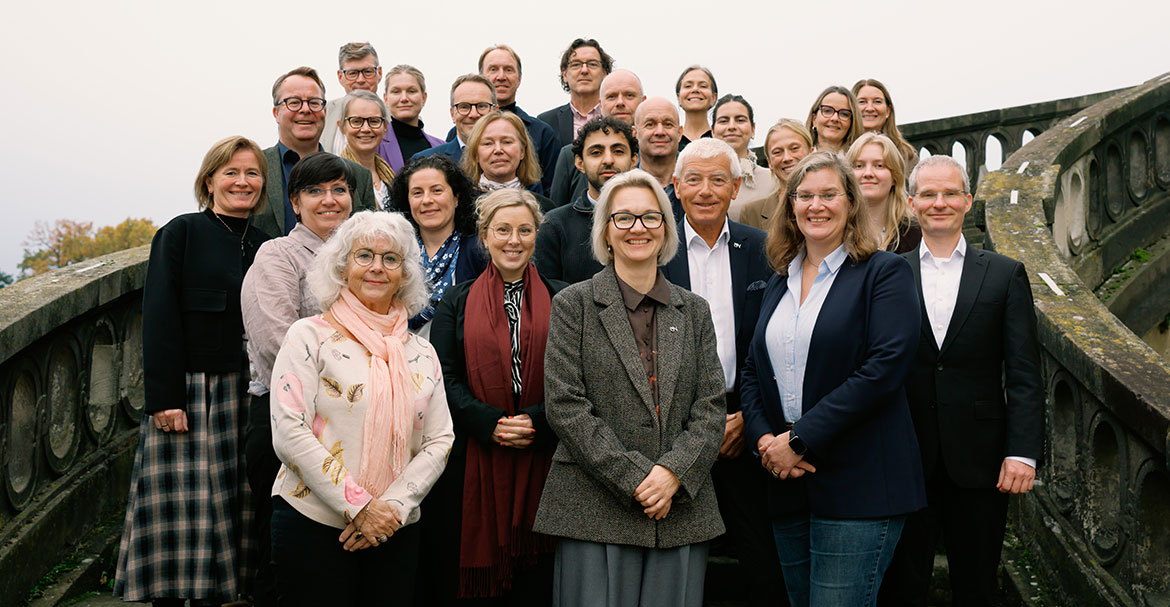
USN is currently developing a new university strategy and used the visit to exchange ideas with representatives of the University of Potsdam about current challenges and approaches to institutional development. Both universities are exploring ways to secure sustainable funding for their activities and integrate the European university alliance EDUC into their institutional structures over the long term.
Another major topic of discussion was the role universities play in their communities and regions. As expectations grow for universities to align their expertise and services more closely with regional institutions and societal needs, their impact on society is becoming increasingly important. The University of Potsdam presented a range of initiatives in this area, from its knowledge and technology transfer services and partnerships with regional businesses, including those involved in its Partnerkreis network, to opportunities for European cooperation through EDUC. The importance of involving students in shaping university life was also a recurring theme, particularly in connection with plans for the new Am Brauhausberg campus.
Both universities are strongly committed to knowledge and technology transfer. The Startup Service at Potsdam Transfer began by presenting the University of Potsdam’s startup ecosystem and the extensive support available to researchers seeking to turn their ideas into businesses. The presentation highlighted the importance of international networks, knowledge sharing, and collaboration between universities in learning from one another and strengthening support systems for entrepreneurs across national borders. The discussions then turned to the Potsdam Science Park ecosystem and its role in connecting academic research, business, and entrepreneurship. The Science Park offers a wide range of services for researchers and aspiring entrepreneurs, including career development and professional training, technology transfer, startup advice, funding opportunities, networking, coworking spaces, and laboratory and office facilities. The visit to Golm demonstrated how Potsdam Transfer and the Potsdam Science Park complement each other in promoting innovation, entrepreneurship, and knowledge transfer. It also provided an opportunity to share experiences and identify new possibilities for international cooperation, including with USN.
The University of Potsdam and the University of South-Eastern Norway share a similar institutional profile. Both are relatively young universities with around 19,000 students each. USN was established eight years ago through the merger of several long-established universities of applied sciences. With four faculties – Technology, Natural Sciences and Maritime Sciences; Health and Social Sciences; Humanities, Sports and Educational Science; and the USN School of Business – it is one of Norway’s largest higher education institutions. Its eight campuses are spread across southeastern Norway. USN combines strong regional ties with international ambitions in education, research, and innovation.
In addition to their collaboration within the European Digital UniverCity (EDUC) alliance, both universities are members of YERUN, the Young European Research Universities Network.
More information
On the EDUC Alliance: https://www.uni-potsdam.de/de/educ and https://www.educalliance.eu/
On YERUN: https://www.uni-potsdam.de/de/international/young-european-research-universities-network-yerun and https://yerun.eu/