News from the University of Potsdam

Subjects
Selected Subject:
Dr. Matthias Hartlieb im Interview

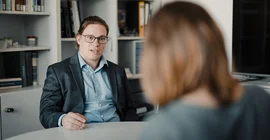
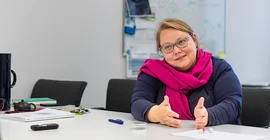
“Our Goal is to Develop an Alternative to Antibiotics” – Matthias Hartlieb and his team research synthetic polymers for biomedical applications

Dr. Matthias Hartlieb has declared war on antibiotic-resistant germs and, together with his colleagues, is researching how the properties of polymers …
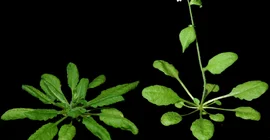
Photo of two plants

Plant Phenotypes and Nano-Metals – Two New Collaborative Research Centers for the University of Potsdam

Researchers from the Faculty of Science at the University of Potsdam submitted two successful proposals for Collaborative Research Centers to the …
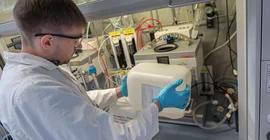
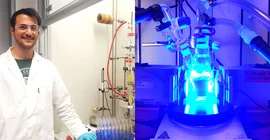
Left: Dr. Stefano Mazzanti in the lab / Right: photocatalytic reactor

Nature-like Photosynthesis – Publication Prize 2023 of Leibniz-Kolleg Potsdam for Stefano Mazzanti

Carbon neutral fuels? Artificial Photosynthesis as future technology? All possible, as shown by the research of Stefano Mazzanti. During his PhD, he …
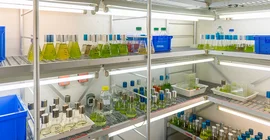
The walk-in sample chamber from the "DynaTrait" project.

Diversity Provides Stability – In the Priority Program “DynaTrait”, biologists combine mathematical models, field studies, and laboratory experiments to explore how nature works

It is comfortably warm and bright in the climate chamber. At first glance, you don’t see that the numerous glass flasks filling the illuminated …
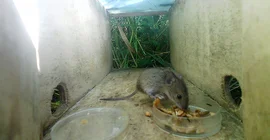
Behavioral experiment with wild rodents.

“We Recognize Animals as Individuals” – Researchers of the University of Potsdam investigate the personalities of wild animals

Jana Anja Eccard knows her mice well. For 27 years, she has been researching the behavior of small rodents in numerous experiments, both in the …
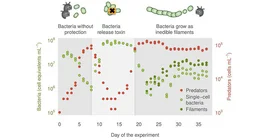
“The three phases of exceptional dynamics: (1) Predation on the unprotected bacteria by predators, (2) toxin formation as cooperative defence and recovery of the bacterial population, (3) filament formation as individual defence through evolution and stabilisation of densities”.

In the end, it’s the individual advantage that counts – Bacteria rely on cooperation and evolution in order to defend themselves against predatory protists

Eating and being eaten is a normal process in nature. These predator–prey dynamics help to stabilise ecosystems. It ensures that individual species do …
Prof. Henrike Müller-Werkmeister

Shorter than the blink of an eye – Prof. Henrike Müller-Werkmeister can watch molecules in action with ultrashort laser beams


The sun was one of the first objects to be studied spectroscopically. As early as the 19th century, the researchers Robert Bunsen and Gustav Robert …
Data collection with a field spectrometer

Understanding Tipping Points in Savannas – Ecologist Prof. Anja Linstädter Researches How Humans Affect the Development of African Savannas and Grassland


Since September 2020, Anja Linstädter has been Professor for Biodiversity Research and Systematic Botany at the University of Potsdam and Director of …
DNA-Sequenzierung des Grauwolfs

Dog ancestry can be traced to two separate wolf populations

An international group of geneticists and archaeologists with participation of the University of Potsdam have found that the ancestry of dogs can be …
Prof. Dr. Katja Hanack (M.) und Anja Hönow (l.) im Interview

Cells with Special Demands – A new detection system for SARS-CoV-2 is being developed at the University of Potsdam

COVID-19 tests are an important tool in pandemic response. Antigen rapid tests provide a result in just a few minutes but are relatively inaccurate. …