

Accounts from early expeditions to the Seychelles more than 250 years ago described crocodiles as common along the coasts of the archipelago. But after the first settlers established a permanent presence in 1770, the Seychelles crocodiles were completely wiped out within 50 years.
A new genetic study now shows that the crocodiles on the remote Seychelles islands did not belong to a separate species. Instead, they represented the westernmost population of the saltwater crocodile (Crocodylus porosus). The result confirms an earlier hypothesis that had been based solely on external characteristics.
In their study, researchers from the University of Potsdam, the Bavarian State Collections of Natural History (SNSB), the University of Bergen in Norway and the Natural History Museum of the Seychelles examined the evolutionary history and distribution of the saltwater crocodile by analyzing its DNA. They combined genetic data from modern samples with mitochondrial genomes from historical museum specimens of the genus Crocodylus, including material from the Seychelles crocodile, which disappeared around 200 years ago.
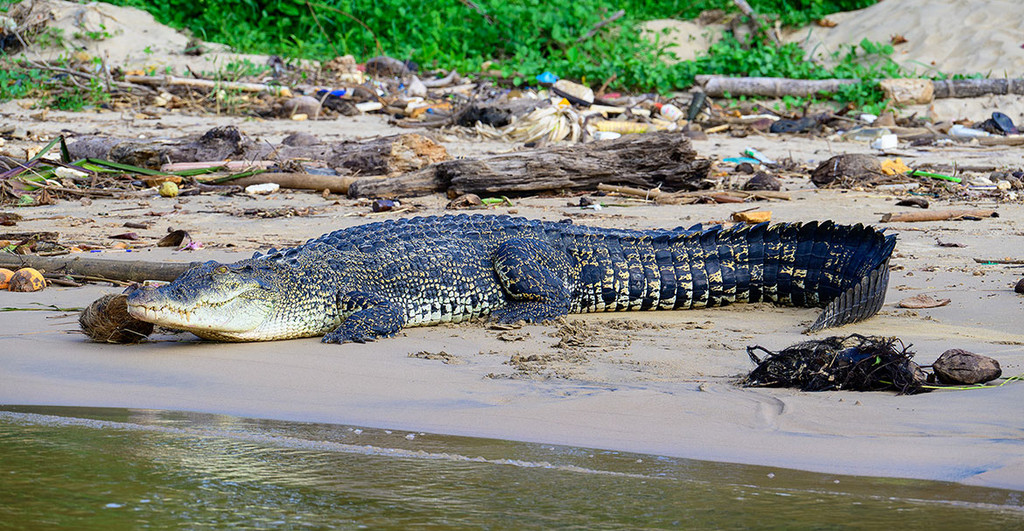
Among all living crocodiles, the saltwater crocodile is the best adapted to life in the ocean. Special salt glands, for example, allow it to excrete excess salt and survive for long periods in seawater. This enabled the species to colonize islands and coastal regions over thousands of kilometers. “The founders of the Seychelles population must have drifted at least 3,000 kilometers across the Indian Ocean to reach the remote archipelago, perhaps even much further” says reptile expert Frank Glaw of the SNSB and senior author of the study.
“The genetic patterns suggest that saltwater crocodile populations remained connected over long periods and across great distances, pointing to the high mobility of this species,” explains first author Stefanie Agne of the University of Potsdam. To this day, the saltwater crocodile is one of the most widely distributed reptiles on Earth. Before the Seychelles population was exterminated, its range was even larger, stretching more than 12,000 kilometers from Vanuatu in the Pacific Ocean to the Seychelles in the Indian Ocean.
Image 1: Saltwater crocodiles can grow to more than six meters in length and weigh over a metric ton, making them among the largest and heaviest living reptiles in the world. They often inhabit coastal areas, such as the mouth of the Nilgawa River in the city of Matara in southern Sri Lanka, which is shown here. Photo: Kathrin Glaw.
Image 2: Sampling the Seychelles crocodiles. The three incomplete skulls from the Seychelles National Museum are among the few preserved remains of the Seychelles crocodiles. Photo: Kathrin Glaw.
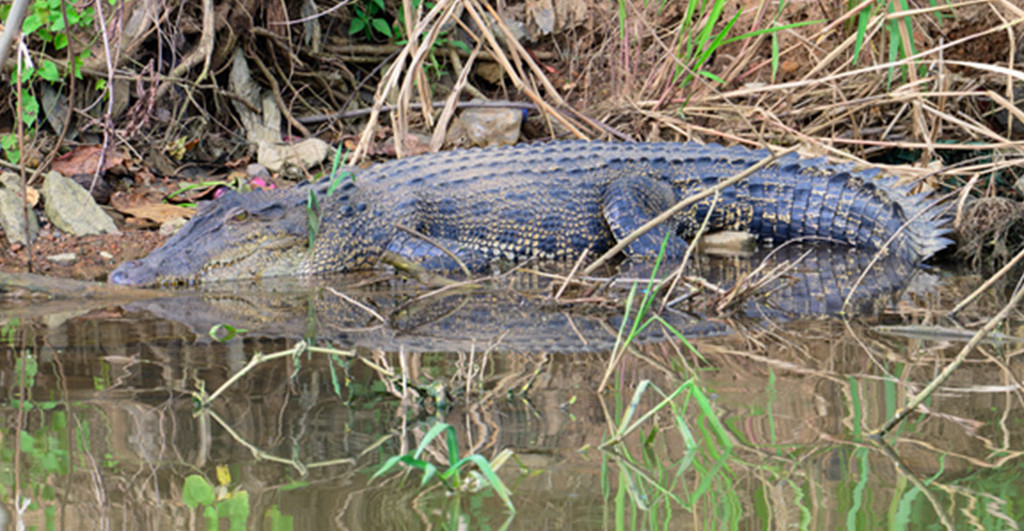
Image 3: The saltwater crocodile gets its German name from the two bony ridges that run parallel in front of the eyes along the snout (clearly visible here). Photo: Kathrin Glaw.
Link to Publication: Agne S, Arnold P, Belle B, Straube N, Hofreiter M, Glaw F. 2026 Mitogenomic Crocodylia phylogeny and population structure of Crocodylus porosus including the extinct Seychelles crocodile. R. Soc. Open Sci. 13: 251546. https://doi.org/10.1098/rsos.251546
Author: Press Release SNSB (Staatliche Naturwissenschaftliche Sammlungen Bayerns)
Contact:
Dr. Patrick Arnold, Institut für Biochemie und Biologie
Tel.: 0331/977-5437
E-Mail: [email protected]