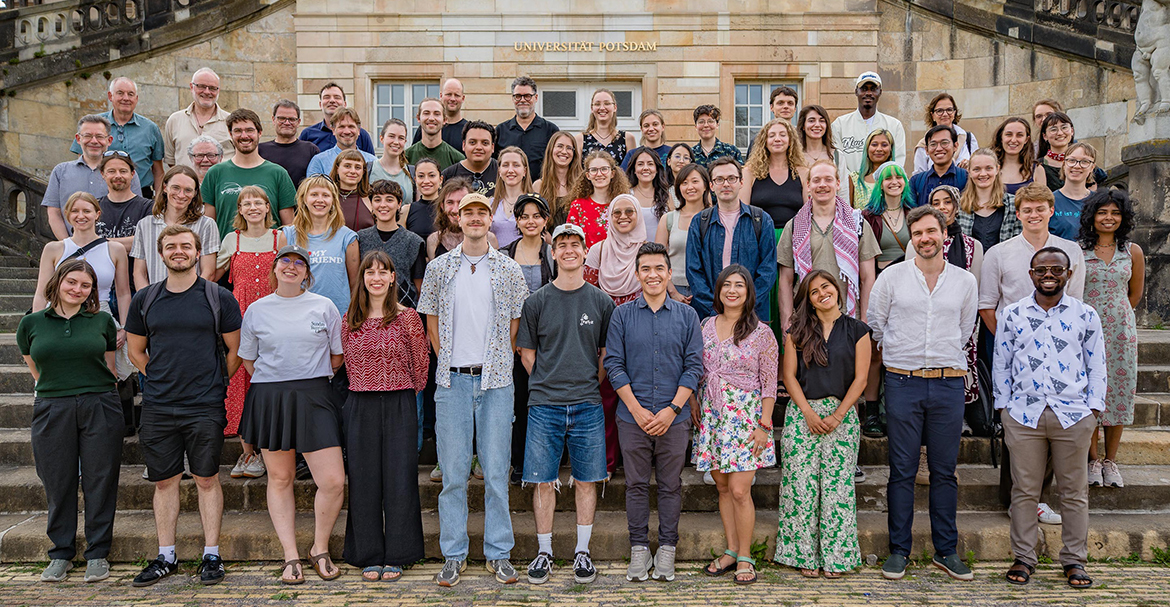
What began in 2021 as an innovative program has quickly evolved into a flagship initiative. The English-language degree program receives hundreds of applications from around the world each year. However, class sizes are deliberately kept small to ensure a high level of student support.
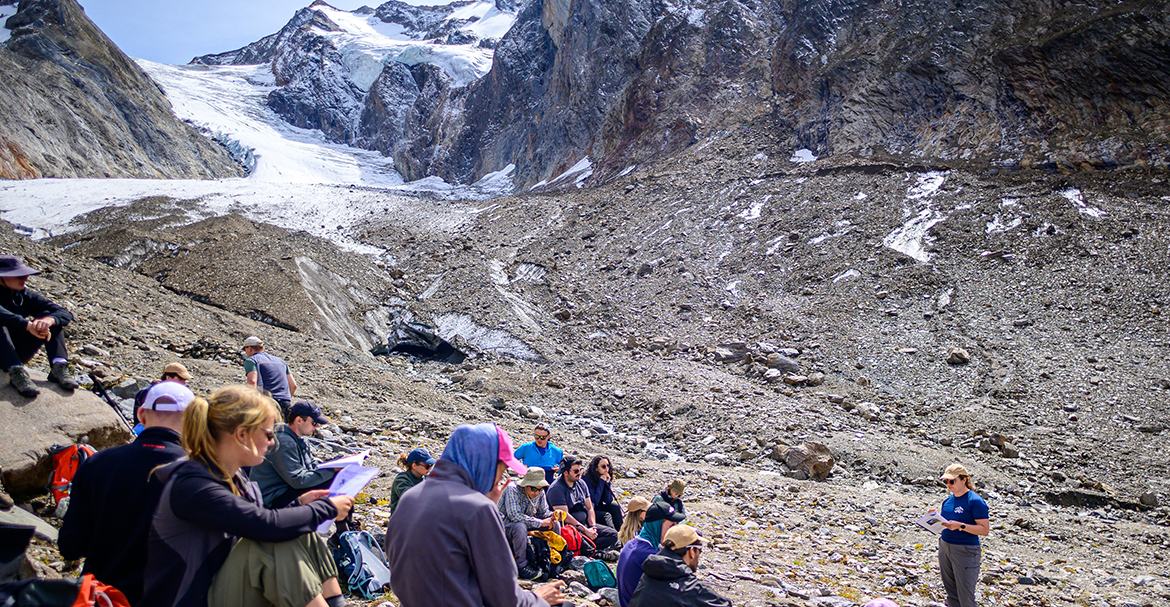
The program, which is strongly research-oriented and interdisciplinary in nature, is led by the Institute for Environmental Sciences and Geography and the Institute for Physics and Astronomy at the University of Potsdam. Thanks in part to close cooperation with renowned partner institutions such as the Potsdam Institute for Climate Impact Research, the Alfred Wegener Institute for Polar and Marine Research, the Helmholtz Center for Environmental Research, and the Research Institute for Sustainability, students gain early insights into cutting-edge research. In the process, they become familiar with state-of-the-art scientific methods, ranging from numerical modeling and programming to big data analysis. During the annual mandatory field trip to the Ötztal Alps in Austria, they study current climate and environmental changes firsthand. They explore the geology, glaciers, permafrost, and alpine flora and fauna, and speak with local experts to understand the impacts of climate change on the environment, the region, and tourism.
Today, five years later, CLEWS represents a new generation of researchers who view environmental problems in all their complexity and consistently adopt an Earth system approach: climate, oceans, land surfaces, water and material cycles, and human activities are not analyzed in isolation, but rather in terms of their interactions. This integrative perspective is crucial for understanding the multifaceted challenges of climate change and developing sustainable solutions.
This is another reason why economic, political, and social dimensions are taken into account from the very beginning. After all, what ultimately matters is not only describing this crucial transformation but also helping to shape it. New inspiration for this also comes from the “Potsdam Climate & Sustainability Lectures,” a lecture series featuring internationally renowned climate experts such as Johan Rockström and Stefan Rahmstorf, as well as socially engaged individuals like Sabine Minninger from the nongovernmental organization “Brot für die Welt,” who spoke about the impact of climate change on human mobility. In her lecture, climate activist Luisa Neubauer emphasized how helpful it is for researchers to be able to share their findings with the public. Effectively communicating knowledge is also part of the CLEWS program, as graduates will be in demand worldwide across a broad range of professions to address the consequences of global warming in a scientifically sound manner.
More information: https://www.uni-potsdam.de/de/umwelt/clews-masters-program